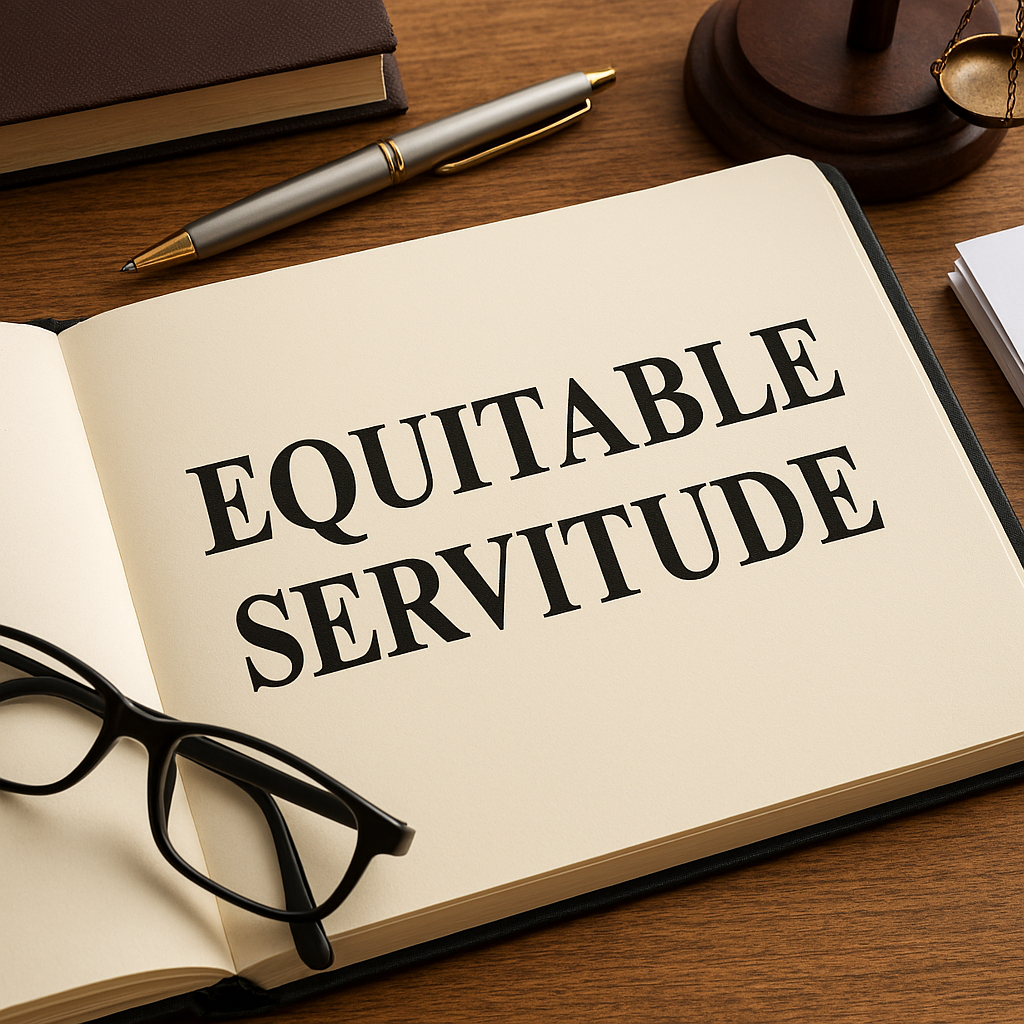
An equitable servitude is a legal term to describe a non-possessory interest in land that operates much like a covenant running with the land. In other words, it operates very much like a restriction on the use of land that is held by a third party.
Golf courses provide a great example. In case from Washington state, the developer and its successors built a golf course complex and sold lots to homeowners adjacent or near the golf course. Purchasers were shown a recorded plat showing the golf course to induce them to purchase their lots. Subsequently, a successor developer planned to close the golf course to develop additional residential housing. A group of homeowners objected and sought to impose an equitable servitude to stop the planned residential development. They argued they relied on the developer’s promise that the golf course complex was a permanent fixture. The court ruled although no writing required the property to be used as a golf course, an equitable servitude and injunctive relief were available under the circumstances.
Equitable servitudes are typically created either by deed, lease, or other written agreement. As shown above, they can also be implied through certain written materials in unusual circumstances. Therefore, two elements are generally required to prove an equitable easement exists: (1) there must be some writing that sets forth the terms of the equitable easement–they cannot be created orally; and (2) the person bound by the restrictions must have had some notice of the terms of the equitable easement.
Seasoned real estate attorneys know to seek out potential equitable servitudes in certain circumstances to ensure a prospective purchaser can use the land however it chooses under the local zoning laws.
David Seidman is the principal and founder of Seidman Law Group, LLC. He serves as outside general counsel for companies, which requires him to consider a diverse range of corporate, dispute resolution and avoidance, contract drafting and negotiation, and other issues.
He can be reached at david@seidmanlawgroup.com or 312-399-7390.
This blog post is not legal advice. Please consult an experienced attorney to assist with your legal issues.