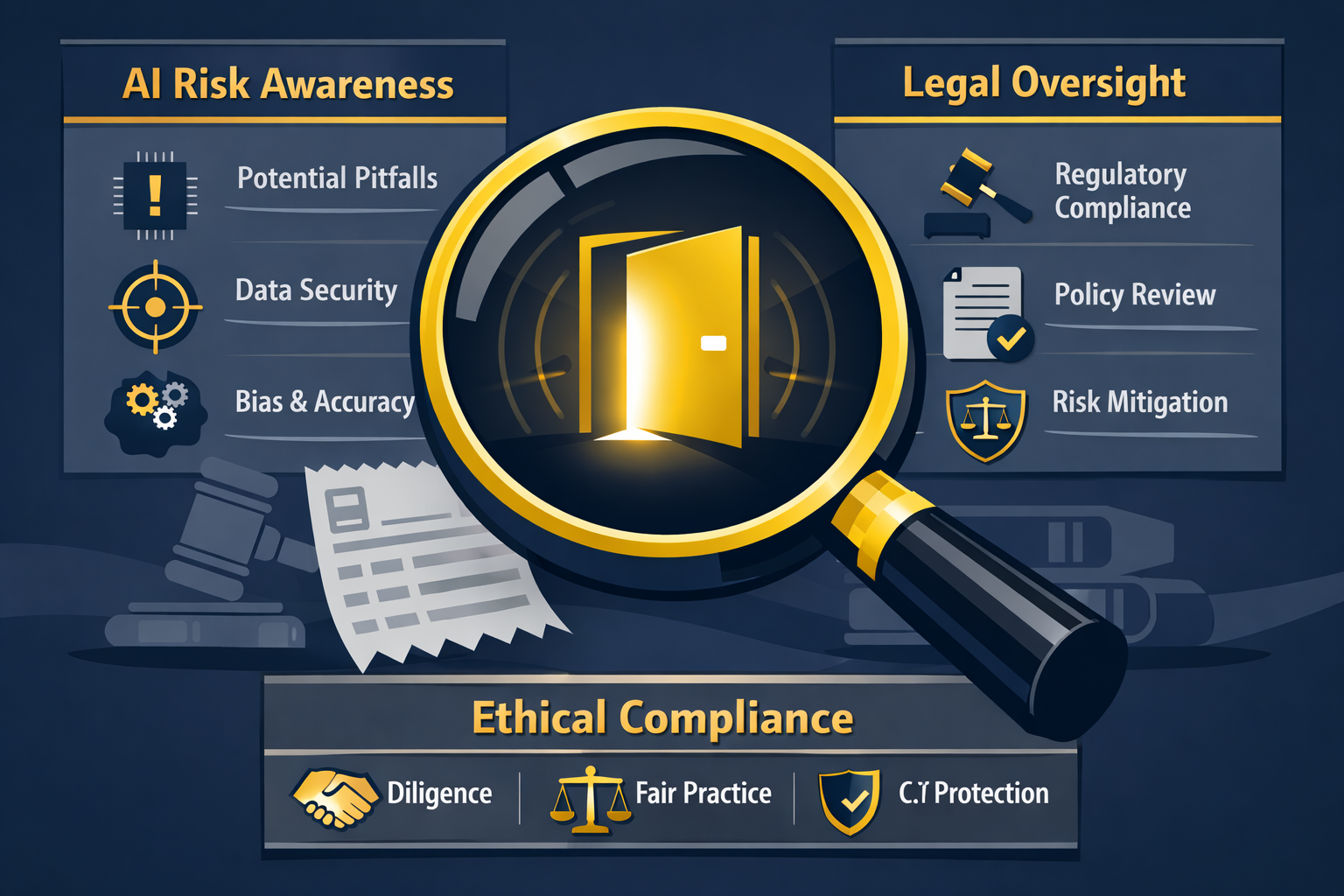
The legal profession is experiencing a technological paradigm shift. Artificial Intelligence offers unprecedented capabilities for drafting, research, and data analysis. However, for law firms and their clients, this rapid adoption has triggered a massive privacy reckoning. The way most consumer AI tools handle data is fundamentally incompatible with the strict demands of attorney-client privilege.
At Seidman Law Group, safeguarding client confidentiality is our highest duty. AI is an extraordinary asset for case strategy, contract analysis, and legal research, but it cannot come at the expense of client trust. The legal profession must strictly avoid consumer-grade AI and adopt private, zero-retention infrastructure to protect sensitive data.
The End of the AI Privacy Expectation
If you think your interactions with standard AI chatbots are strictly confidential, recent legal developments dictate otherwise. The landscape of AI privacy shifted dramatically in early 2026:
- In February 2026, a federal court issued a landmark ruling establishing that AI conversations carry zero expectation of privacy.
- Courts have forced major AI providers to retain all user logs, explicitly including deleted conversations, so they can be preserved as discoverable evidence.
- Major platforms have been subjected to court orders compelling them to produce tens of millions of user conversations for litigation and to share personal information with third parties.
The American Bar Association (ABA) has formally recognized the severe privilege risks associated with transmitting confidential client data to third-party AI providers.
The Security Crisis in Consumer AI
Mainstream consumer AI tools—such as ChatGPT, Microsoft Copilot, and Anthropic’s Claude—were built for general public use, not for the rigorous security demands of the legal field. Recent headlines underscore the vulnerability of these platforms:
- Data Leaks: Significant source code leaks and data vulnerabilities have exposed enterprise data on multiple leading AI platforms.
- Breaches & Hacks: Over 100,000 stolen AI credentials have been sold on the dark web, and major providers have suffered undisclosed hacks.
- Employee Negligence: Startling industry metrics reveal that up to 11% of the data employees paste into mainstream AI tools is highly confidential.
When sensitive legal documents are uploaded to these platforms, they often touch third-party servers and are retained in data logs, creating an unacceptable exposure risk.
Embracing innovation means understanding its risks—and choosing the right tools to mitigate them.
David Seidman is the principal and founder of Seidman Law Group, LLC. He serves as outside general counsel for companies, which requires him to consider a diverse range of corporate, dispute resolution and avoidance, contract drafting and negotiation, real estate, and other issues. He can be reached at david@seidmanlawgroup.com or 312-399-7390.
This blog post is not legal advice. Please consult an experienced attorney to assist with your legal issues.
Photo credit: CoPilot creation