Two years ago the FTC tried to ban non-compete agreements nationwide. A federal court in Texas blocked the rule. The Biden Administration appealed. Then the new FTC chair withdrew the appeal in September 2025. The nationwide ban is dead.
What replaced it is arguably worse for small business owners who operate in multiple states: a patchwork of state laws that changes faster than most owners can track.
Tennessee signed HB 1034 into law on May 7, 2026, effective July 1. The statute bars non-competes for any employee earning less than $70,000 in annualized compensation. For employees above that threshold, the law creates rebuttable presumptions on duration — two years for employees and independent contractors, three years for distributors and franchisees, five years in a sale-of-business context. Courts can modify an overbroad agreement rather than throw it out entirely, but the burden has shifted.
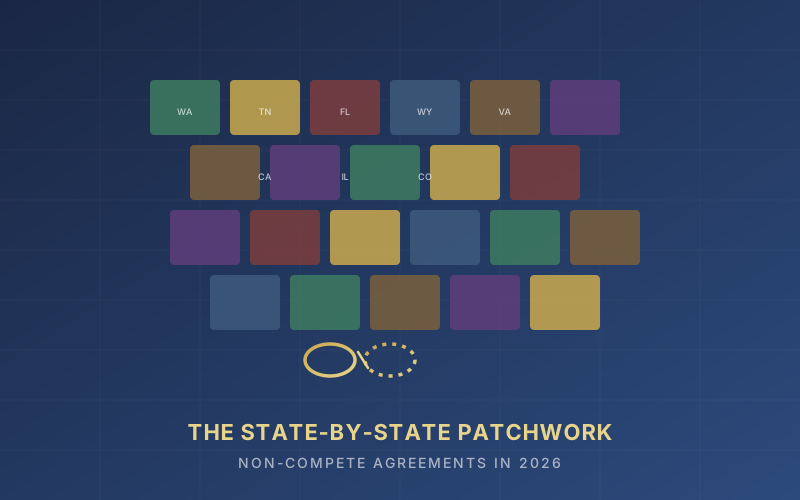
Washington went further. HB 1155 will make non-competes unenforceable as of June 30, 2027 — and applies retroactively. Virginia now bars non-competes for all employees entitled to FLSA overtime as of July 1, 2025, and two additional restrictions took effect July 1, 2026. Wyoming enacted a near-complete ban, effective July 1, 2025, with narrow exceptions for trade secrets and executive personnel. Meanwhile, Florida’s CHOICE Act, effective July 1, 2025, moved in the opposite direction, strengthening non-competes for higher earners.
The practical problem for small businesses is straightforward: a non-compete that is perfectly enforceable in Florida may be void in Tennessee and illegal in Wyoming. Template agreements drafted three years ago are increasingly dangerous. If your business has employees, contractors, or distributors in more than one state, a single form agreement is not adequate.
The advice is simple and unavoidable: audit your existing non-compete agreements. Identify which state’s law governs each one. Confirm that the compensation thresholds, durations, and scope still comply. And if you are acquiring a business with existing restrictive covenants, make this part of due diligence rather than an afterthought.
David Seidman is the principal and founder of Seidman Law Group, LLC. He serves as outside general counsel for companies, which requires him to consider a diverse range of corporate, dispute resolution and avoidance, contract drafting and negotiation, real estate, and other issues. He can be reached at david@seidmanlawgroup.com or 312-399-7390.
This blog post is not legal advice. Please consult an experienced attorney to assist with your legal issues.